
Survive
Do Mylar Blankets Work? How Emergency Blankets Keep You Warm
Nov
Mylar blankets are in almost every survival kit, first aid bag and car emergency kit, but many people wonder whether a sheet of shiny plastic thinner than a sandwich bag can really keep someone warm. So, do mylar blankets work? Yes, when you use them the right way and understand what they can and cannot do. A pack of emergency mylar blankets is one of the cheapest, lightest ways to add warmth to any kit.
This guide explains what mylar blankets are, how they work, where they fall short, and how to get the most warmth out of one.
What Is a Mylar Blanket?
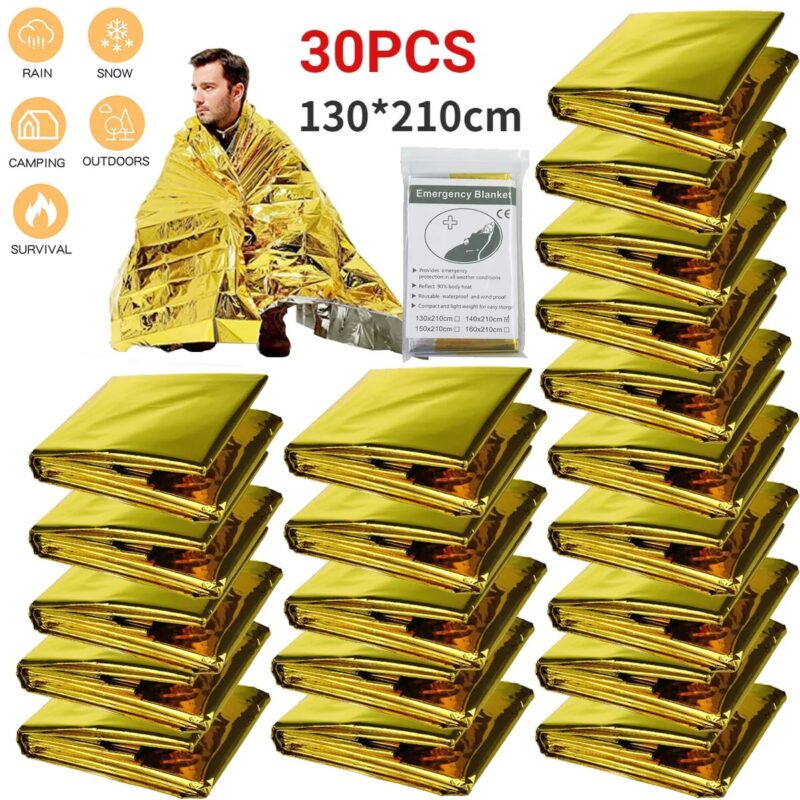
A mylar blanket, also called an emergency blanket, space blanket or thermal blanket, is a thin sheet of polyester film coated with a reflective layer of aluminum. Mylar is a brand name for this kind of polyester film, and the name stuck. The material traces back to the space program of the 1960s, which is where the nickname space blanket comes from.
Emergency blankets come in a few common forms:
- Flat sheets that fold down to the size of a deck of cards
- Two-tone blankets with a silver side and a gold or colored side
- Bivys and sleeping bags made of the same material, which wrap all the way around you
- Tube tents and emergency shelters that use reflective film as a simple shelter
How Do Mylar Blankets Work?
Your body loses heat in several ways. A mylar blanket helps with three of them:
- Radiation: your body gives off heat as infrared radiation. The reflective coating bounces much of that heat back toward you instead of letting it escape.
- Convection: wind strips warm air away from your body. Because the film is windproof, it keeps a layer of warm air close to you.
- Evaporation: the film is waterproof, so it blocks rain and snow and slows heat lost through moisture.
What a mylar blanket does not do is generate heat. It only helps you hold on to the heat your body is already producing.
So, Do Mylar Blankets Work?
They do, within limits. A mylar blanket can make a real difference in keeping an injured person warm, holding off hypothermia while you wait for help, or adding warmth to a sleeping setup that is not quite enough. That is why they show up in so many first aid kits and survival kits.
They work best when they are part of a system, not the whole system. On their own, they are not a substitute for warm clothing, a sleeping bag or a real shelter.
The Limits of Emergency Blankets
- Little insulation: the film is too thin to trap much air, so it does almost nothing to stop heat loss into cold ground. Always put something between you and the ground.
- Condensation: because the film does not breathe, moisture from your body can build up inside. Over many hours this can leave you damp.
- Durability: thin flat sheets tear easily, especially in wind, and are hard to refold. Many are best treated as single-use.
- Noise: they crinkle loudly, which matters for some uses and not for others.
- Heat and flame: keep them away from open flames and stoves.
How to Use a Mylar Blanket the Right Way
- Get out of the wind and wet first. Find or build shelter if you can.
- Insulate from the ground. Sit or lie on a pack, sleeping pad, branches or extra clothing.
- Wrap it close. Wrap the blanket snugly around your body, including your head but not your face, so it traps warm air.
- Add a layer over it. A jacket, regular blanket or sleeping bag over the mylar holds the warm air in and protects the film from tearing.
- Face the silver side in. On two-tone blankets, most guidance says to face the silver side toward your body when the goal is warmth.
- Vent now and then. If you are wrapped for a long time, open it briefly to let moisture escape.
For more warmth, use a bivy instead of a flat sheet. A mylar emergency bivy sleeping bag wraps completely around you, so there are no open edges for warm air to escape.
Other Uses for Emergency Blankets
- Shock care: keeping an injured person warm while waiting for help.
- Shelter: as a ground sheet, a reflective liner in a tent or a quick rain cover. An emergency survival tube tent takes the idea further.
- Signaling: the reflective surface catches light and can help rescuers spot you.
- Shade: with the reflective side facing the sun, a blanket can reflect heat away in hot weather.
- Power outages: layered under a regular blanket at home during a winter outage. Our guide on how to prepare for a power outage covers more ways to stay warm.
Where to Keep Mylar Blankets
Because they are so small and inexpensive, keep one everywhere you might need it: your car, your hiking pack, your first aid kit, your go-bag and your desk at work. A multi-pack makes it easy to stock every kit at once. Our car emergency kit checklist shows how they fit into a full winter kit.
Key Takeaways
- Mylar blankets work by reflecting body heat and blocking wind and moisture.
- They do not create heat or insulate you from cold ground, so always add something underneath you.
- They work best as part of a system, layered with clothing, a blanket or a sleeping bag.
- A bivy holds more heat than a flat sheet because it wraps all the way around you.
- They are light and inexpensive enough to keep in every kit you own.
Frequently Asked Questions
Do mylar blankets keep you warm?
Yes, they help you hold on to your body heat by reflecting it back and blocking wind. They work best when you are out of the wind, insulated from the ground and have another layer over the blanket.
Which side of an emergency blanket goes toward your body?
On two-tone blankets, most guidance says to face the silver side toward your body when you want to stay warm. On single-color blankets, either side works.
Are mylar blankets reusable?
Thin flat sheets can be reused if they are not torn, but they are hard to refold and tear easily, so many people treat them as single-use. Heavier blankets and bivys hold up better to repeated use.
What are mylar blankets made of?
They are made of thin polyester film coated with a reflective layer of aluminum. Mylar is a brand name for this type of film.
Can you use a mylar blanket in a car?
Yes. They are one of the best items for a car emergency kit, because they take up almost no space and help you stay warm if you are stranded in winter.
Is a mylar blanket better than a regular blanket?
Not on its own. A regular blanket insulates, while a mylar blanket reflects heat and blocks wind. Used together, with the mylar underneath, they work better than either one alone.
Conclusion
So, do mylar blankets work? Yes, as a light, inexpensive backup that reflects your body heat and keeps wind and moisture out. Use them with insulation underneath and a layer on top, choose a bivy for more warmth, and keep one in every kit. The Survival Place carries mylar emergency blankets, bivy sleeping bags and emergency shelters, so stock up and keep your kits ready for winter.
