
Survive
What Is an IFAK? What It Stands For, What Is Inside and Who Needs One
Nov
If you have spent any time around tactical gear, shooting ranges or preparedness circles, you have probably heard the term IFAK. So, what is an IFAK? It stands for individual first aid kit, and it is a compact trauma kit built to treat life-threatening injuries, especially severe bleeding, in the first few minutes before help arrives. It is not the same as the everyday kit in our first aid kits collection that handles cuts and blisters, and the difference matters.
This guide explains what IFAK stands for, what goes inside one, how it differs from a regular first aid kit, and who should carry one.
What Does IFAK Stand For?
IFAK stands for individual first aid kit. The term comes from the military, where each service member carries a small trauma kit so they can treat themselves or a teammate immediately after an injury. The idea has since spread to law enforcement, hunters, range shooters, outdoor workers and preppers who want the same ability to act fast.
The key word is individual. An IFAK is meant to be carried by one person, on their body or gear, and is usually used on that person or someone right next to them.
What Is an IFAK Used For?
An IFAK is built around the injuries that can kill someone before an ambulance arrives, above all serious bleeding from an arm or leg. Military and tactical medicine teaches care in a set order often summarized as MARCH:
- Massive bleeding: stop serious bleeding first.
- Airway: make sure the person can breathe through an open airway.
- Respiration: treat chest wounds that affect breathing.
- Circulation: check for other bleeding and signs of shock.
- Hypothermia: keep the injured person warm.
The contents of an IFAK follow that order, starting with bleeding control.
What Is in an IFAK?
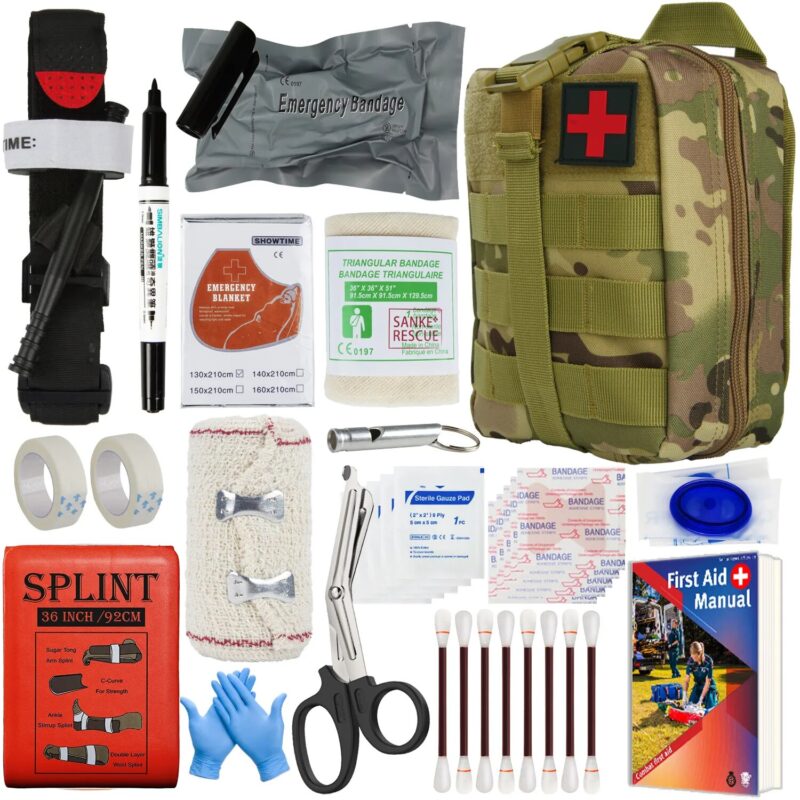
Contents vary by kit and by the person carrying it, but most IFAKs include:
- A tourniquet: for stopping severe bleeding from an arm or leg.
- Wound packing gauze: compressed or hemostatic gauze for packing deep wounds.
- A pressure bandage: often an Israeli-style emergency bandage that applies steady pressure to a wound.
- Chest seals: for sealing open chest wounds.
- Trauma shears: for cutting away clothing to reach an injury.
- Medical gloves.
- Medical tape and a permanent marker: the marker is used to note the time a tourniquet was applied.
- An emergency blanket: to help prevent hypothermia, the last step in MARCH.
Military kits may also include airway devices. These require specific training to use safely and are best left out unless you have it.
IFAK vs. First Aid Kit: What Is the Difference?
A standard first aid kit and an IFAK solve different problems:
- A first aid kit handles common, minor injuries: cuts, scrapes, blisters, burns, splinters and sprains. It is built around adhesive bandages, antiseptic, tape and basic medications.
- An IFAK handles rare but life-threatening injuries, mostly serious bleeding. It is built around a tourniquet, wound packing and pressure bandages.
One does not replace the other. Many people who spend serious time outdoors carry both: an IFAK for the worst case and a regular kit for everything else. Our camping first aid kit list covers what belongs in the everyday kit.
Who Should Carry an IFAK?
An IFAK makes sense for anyone whose activities carry a higher risk of serious injury, or who wants to be able to help in an emergency:
- Hunters and range shooters
- Anyone who works with chainsaws, axes or heavy equipment
- Backcountry hikers, climbers and campers far from help
- Drivers who want a trauma kit in the vehicle
- Preppers building a complete emergency kit
How to Carry an IFAK
An IFAK only helps if you can reach it quickly, possibly with one hand.
- On a belt or plate carrier for range days and tactical use.
- On a backpack strap or the outside of a pack for hiking and hunting. MOLLE webbing on tactical backpacks makes this easy.
- In a vehicle, mounted to a headrest or kept in a known spot within reach of the driver.
Many IFAK pouches use a rip-away design, so the kit can be pulled off its mount in one motion.
Training Matters More Than Gear
Trauma equipment is only as good as the person using it. A tourniquet applied too loosely or in the wrong place can fail to stop bleeding, and wound packing takes practice. If you carry an IFAK, take a bleeding control course such as Stop the Bleed, and practice with a training tourniquet until you can apply one quickly.
It also pays to know your gear. If you plan to rely on the tourniquet in your kit, make sure it is a genuine, recognized model, since counterfeit tourniquets are a known problem. Check expiration dates on hemostatic gauze and other sterile items, and replace anything that has been opened or used.
Should You Build or Buy an IFAK?
A ready-made IFAK is a fast way to get a pouch, a layout and the core supplies in one purchase. Building your own lets you choose each component, which matters most for the tourniquet. Many people start with a pre-built kit and upgrade individual items over time.
Whichever route you take, keep the kit focused. An IFAK works because it is small enough to carry every time and simple enough to use under stress. Everyday supplies like adhesive bandages and blister care belong in your regular first aid kit, not in the trauma pouch, so the items you need in an emergency are never buried.
Key Takeaways
- IFAK stands for individual first aid kit, a compact trauma kit from military medicine.
- It is built to treat life-threatening injuries, especially severe bleeding, in the first few minutes.
- Most IFAKs include a tourniquet, wound packing gauze, a pressure bandage, chest seals, shears and gloves.
- An IFAK does not replace a regular first aid kit. Many people carry both.
- Training is essential. Take a bleeding control course and practice with your gear.
Frequently Asked Questions
What does IFAK stand for?
IFAK stands for individual first aid kit. It is a personal trauma kit that originated in the military.
What is in an IFAK kit?
Most IFAKs contain a tourniquet, wound packing gauze, a pressure bandage, chest seals, trauma shears, medical gloves, tape and a marker. Some also include an emergency blanket.
What is the difference between an IFAK and a first aid kit?
A first aid kit treats everyday injuries like cuts, burns and sprains. An IFAK is a trauma kit designed for life-threatening injuries such as severe bleeding.
Do civilians need an IFAK?
Many civilians carry one, especially hunters, range shooters, people who work with power tools and backcountry travelers. Anyone who carries one should get bleeding control training.
Where should I keep my IFAK?
Somewhere you can reach quickly, often with one hand: on a belt, a pack strap, a plate carrier or a vehicle headrest.
How often should I check my IFAK?
Check it at least once a year. Replace expired gauze and sterile items, and replace anything that has been opened, used or damaged.
Conclusion
So, what is an IFAK? It is a compact, personal trauma kit built to stop severe bleeding and keep an injured person alive until help arrives. Pair it with a regular first aid kit, carry it where you can reach it, and get trained to use it. The Survival Place carries first aid kits, trauma pouches and MOLLE-compatible bags, so browse our collection and build the kit that fits how you get outside.
